Luxury Isn’t Just Designed. It’s Executed.
A shopper spots a high-end leather bag on her favorite celebrity’s Instagram. She opens a new tab and begins to research it online. She looks at reviews, product details, and pricing.
Then, she walks into the store to finally buy the bag. Instead of an elegant moment, she’s met with clutter and confusion.
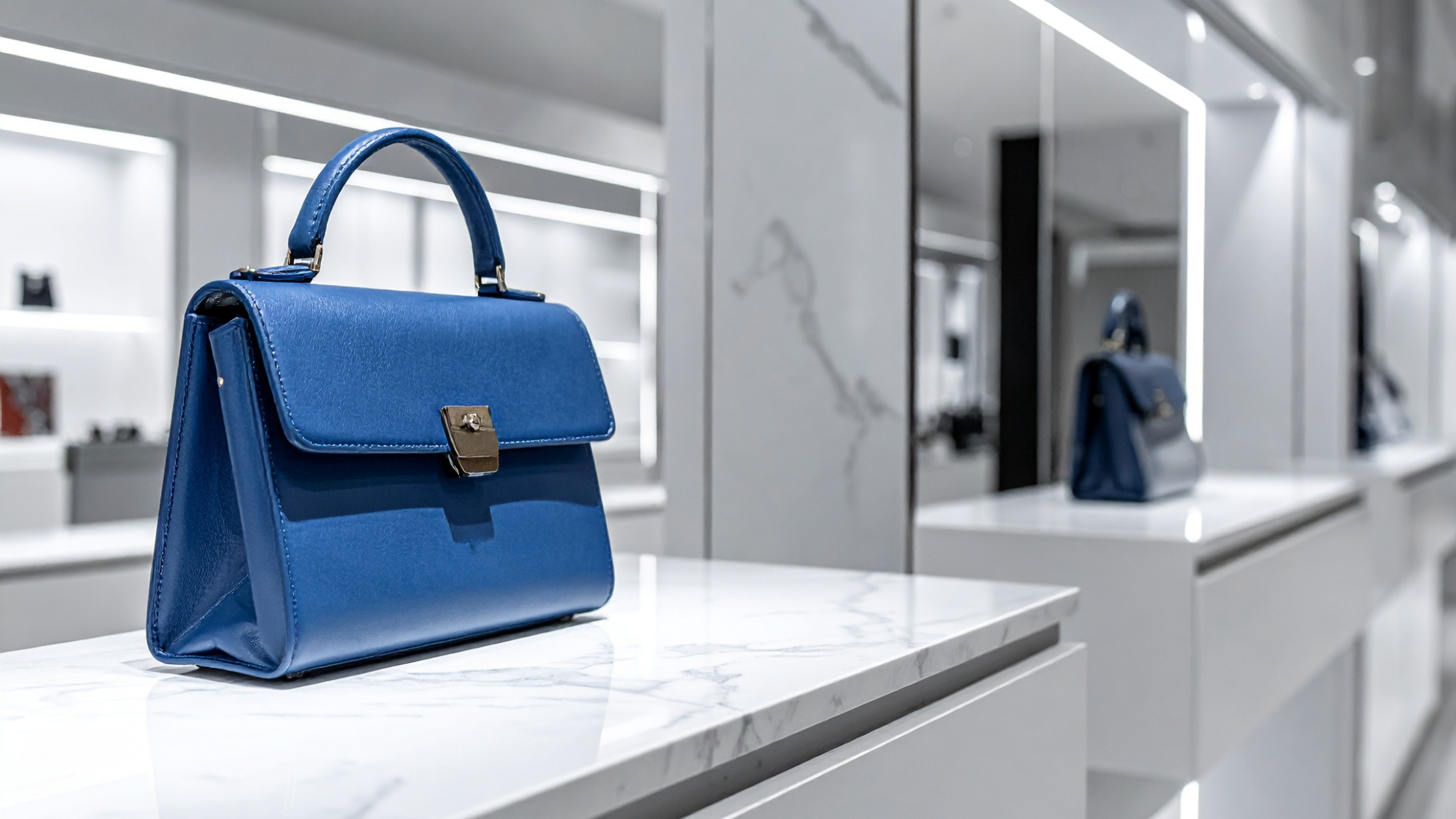
The bag she fell in love with online is squeezed between other accessories on a crowded shelf. The bag has no space to breathe. It doesn’t look like it did online.
The magical moment she pictured is fading, and just like that, the luxury disappears. The story collapses on the shelf.
This kind of disconnect is far more common than luxury retailers want to admit — and it’s an expensive risk. According to a report by GlobalData and One Door, poor visual merchandising costs luxury retailers nearly $10 billion annually in lost sales.
“Companies spend millions on brand strategy, campaigns, and product design,” says Lisa Gulbin, Director of Global Visual Merchandising at Pandora. “But if execution breaks down in-store, all of that investment is wasted.”
In luxury retail, store execution is the brand.
Why Luxury Shoppers Are Less Forgiving Than Ever
Luxury consumers are among the most informed shoppers in retail. They arrive with expectations shaped by:
- Digital storytelling
- Influencer culture
- Flagship experiences
- Perfectly curated brand imagery
They don’t just want to buy a product. They want to step into an exclusive world. When stores fail to meet that expectation, sales slow, and worse, customer trust erodes.
Many luxury brands know visual merchandising best practices, but they’re still trying to deliver these premium experiences using outdated tools and fragmented processes.
From Gulbin’s perspective, most breakdowns fall into three modern execution gaps.
The Three Execution Breakdowns Behind Luxury’s $10B Problem
Disconnected Communication Between HQ and Stores
Many luxury brands still rely on a patchwork of legacy tools:
- Static PDFs and flat planograms buried in binders
- Shared folders in Dropbox or SharePoint
- Long email threads with attachments and too many versions
- Manual photo reviews are sent days or weeks later
For store teams, this “go-to process” creates uncertainty, and for HQ, it creates blind spots.
When store associates are piecing together instructions from multiple places, execution becomes inconsistent by default. Luxury doesn’t tolerate ambiguity, but these outdated communication systems create it.
One-Size-Fits-All Planning in a World of Unique Stores
Luxury retail environments are rarely standardized. Stores exist anywhere from historic buildings and high-end malls to airports and flagships with custom fixtures.
Despite multi-format fleets, many luxury retailers still distribute generic plans that don’t reflect each store’s reality. The result?
- Improvised setups by confused store associates
- Compromised displays
- Inconsistent brand presentation across store formats
Remember that Instagram-famous bag? It ends up underwhelming — not because the product changed, but because the execution didn’t fit the expectation.
See how a global retailer reduced updates from days to minutes across floor plans, communications, and resets — compressing certain execution cycles by as much as 99%. Read the customer spotlight.
No Visibility Into What’s Actually Happening on the Floor
Luxury brands obsess over detail, but many lack visibility into what actually happens on the floor. With old methods, stores don’t have a way to share proof of execution, flag merchandising issues as they happen, or show what was possible vs. what wasn’t.
Because of this, HQ teams are left guessing why performance varies from store to store. They can see sales dip, but without store execution data, it’s impossible to know whether the issue is product, placement, timing, or compliance.
That lack of insight is costly. According to recent luxury retail research, 67% of luxury shoppers still prefer physical stores for their most significant purchases — meaning execution quality directly affects the highest-value transactions.
What “Luxurious” Looks Like in 2026: Aesthetic Excellence and Execution Intelligence
Luxury already excels in creativity. The solution is developing consistency in tandem with creativity, even prioritizing it until it’s repeatable, store-specific, and measurable.
This year, the luxury brands protecting margin and loyalty are building execution systems that deliver:
- A single source of truth for every store that centralizes plans, assets, instructions, and updates — always current
- Store-specific direction by default, not “a best guess” adaptation on the floor
- Real-time issue visibility before shoppers feel it
- Proof of execution, captured fast and reviewed consistently — not weeks later
- The ability to change displays quickly without version confusion
- Measured performance that ties execution quality to outcomes
Visual merchandising platforms, like One Door, were designed to close this gap and connect creative intent to consistent retail execution across every luxury location.
“When you have a repository for store-specific plans, photos, and information in one place — a platform that’s dynamic and allows for collaboration in real-time — you get alignment immediately,” Gulbin says.
“That speed is important because you want to be able to move quickly and try things out. You can monitor your sales, see what works, and then pivot quickly to try something else.”
See Luxury Store Execution in Action
Luxury leaders agree that growth won’t come from opening more stores. It will come from delivering better store experiences. In fact, nearly 30% of luxury executives cite customer experience and loyalty as their top growth driver.
But, in luxury retail, customer experience doesn’t live in strategy decks. It lives on the floor, and it only exists if it’s executed flawlessly.
Watch how Gulbin and Pandora scaled store-specific execution while preserving brand integrity and consistent customer experience in every location.
About Lisa Gulbin
Lisa Gulbin is a global luxury and lifestyle goods executive with deep expertise in visual merchandising, in-store brand experience, and new store development. She has held senior leadership roles at iconic brands including Pandora, Tiffany & Co., Ralph Lauren, and J.Crew.