Virtual Reality Retail Training: How VR Upskills Store Teams Faster and More Consistently
Many store associates dread being handed The Binder — the heavy, outdated manual full of instructions open to interpretation.
Even e-learning modules, often consumed passively on an iPad, act more like box-checking than real training. They rarely expose associates to the realities of the sales floor.
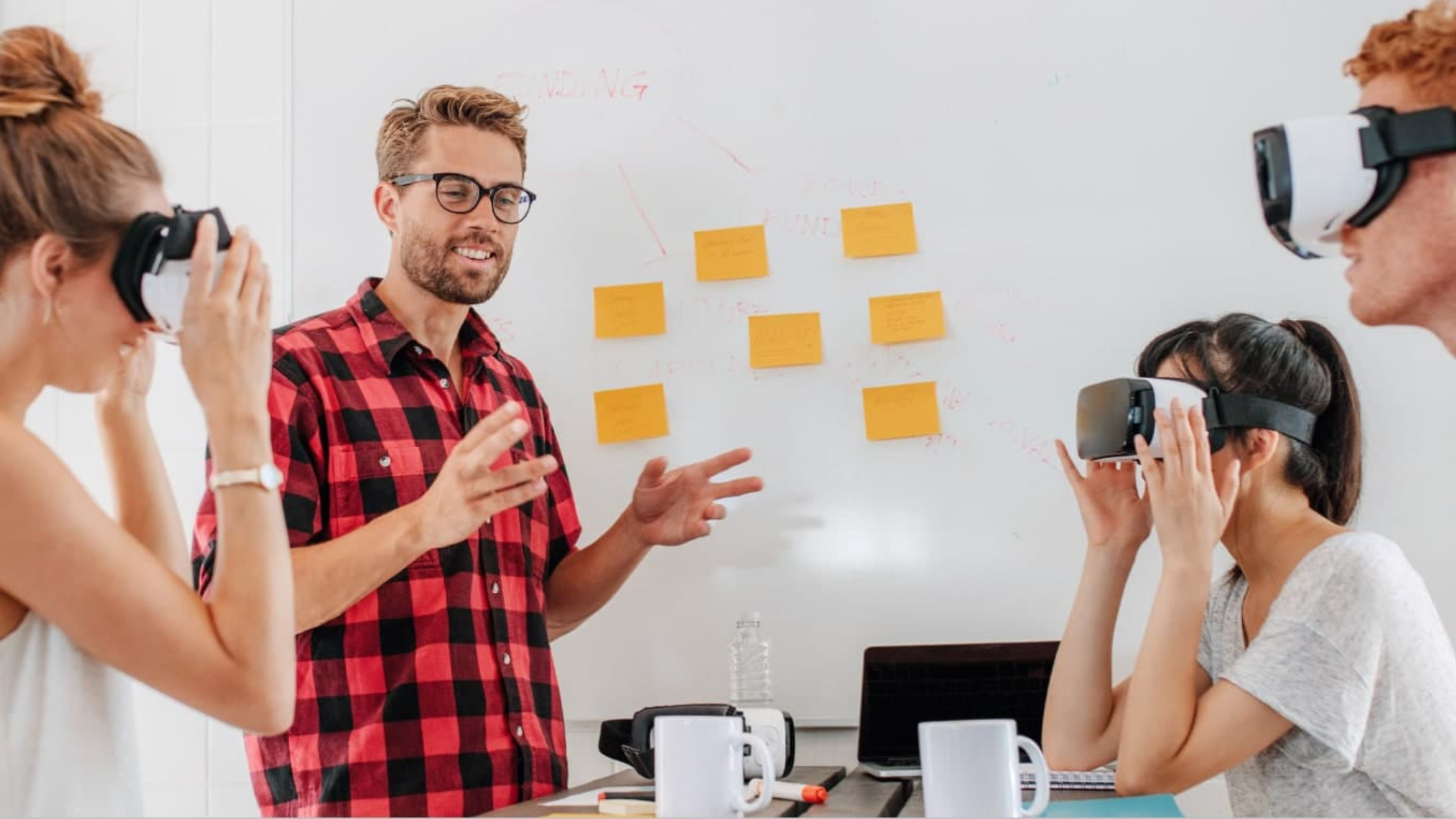
Virtual reality (VR) changes that. With immersive simulations, retailers can onboard and upskill employees faster by giving them hands-on experience inside realistic store environments — before they ever interact with customers.
Below are eight ways leading retailers are using VR to build stronger, more confident store teams.
Streamline Onboarding With Hands-On, Immersive Practice
Traditional onboarding is slow, inconsistent, and dependent on whichever manager is available. VR flips that model.
New hires can practice stocking, zoning, picking, equipment use, and safety protocols in a risk-free virtual store — without interrupting operations or waiting for guidance.
Structured VR onboarding delivers consistency across locations and accelerates proficiency. According to edX, nearly 80% of employees are more likely to stay long-term when offered high-quality training — a meaningful advantage in an industry with chronic turnover.
Train Associates on New Equipment Before It Arrives
Instead of waiting for new equipment, signage packages, or fixtures to hit stores, virtual reality lets teams learn how to use them weeks in advance.
Store associates can walk through setup, operation, troubleshooting, and maintenance long before the real hardware shows up. When launch day comes, the team is already trained.
A great example is when “Walmart introduced VR to the world of employee training and development by using the technology to upgrade training at Walmart Academies nationwide,” according to a press release.
“With the huge success of that program, the company is now providing…VR headsets to all stores in the U.S. to bring the same level of training to more than 1 million Walmart associates.”
Simulate Real Job Roles to Evaluate Candidate Fit
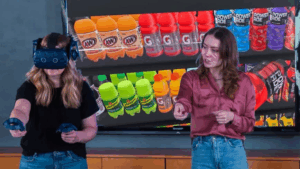
Retailers spend about $1,300 on average to train each new employee, which makes hiring the wrong candidate an expensive mistake. Virtual reality retail training provides a consistent, objective way to evaluate applicants by simulating real tasks. Hiring teams can observe:
- Job readiness
- Task prioritization
- Decision-making
- Stress and pace tolerance
- Customer interaction approach
This leads to smarter hiring, faster decisions, and fewer surprises on day one.
Train Teams on Product Knowledge & Store Standards
Rather than forcing associates to memorize The Binder, VR lets them walk real aisles and see real planograms — all rendered in accurate 3D. Teams can explore:
- New category resets
- Seasonal layouts
- Product placement standards
- Promotional displays
- Cross-selling and adjacency strategies
Because employees experience the environment, knowledge retention is significantly higher than with slides or videos.
Give New Hires a Realistic Preview of the Job
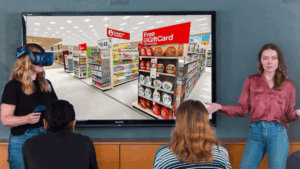
Voluntary retail turnover was 33% in 2023, often because job expectations don’t match reality. Virtual reality job training changes that by offering an accurate, first-person preview of:
- A typical shift
- Task switching and workload
- Customer interactions
- Backroom processes
- Cleanliness and safety expectations
This job transparency boosts retention and ensures new hires feel prepared rather than overwhelmed.
Reduce Time to Proficiency for Store Operations
Retail moves fast, and VR training simulations help store associates keep pace. Virtual reality dramatically shortens the time it takes associates to learn:
- Stocking routines
- Inventory workflows
- Checkout processes
- Store opening and closing procedures
- Display setup and teardown
Because they “do” the work virtually first, associates make fewer mistakes and require less supervision on the sales floor.
Safely Train for Emergency Situations Without Live Risk
Emergency training is critical — and hard to simulate. Virtual reality employee training enables safe, repeatable practice for:
- Weather emergencies
- Power outages
- Suspicious behavior
- Crowd control
- Evacuation procedures
- De-escalation with difficult customers
Employees can practice responses until they’re second nature without exposing anyone to real danger.
Build Stronger Customer Service & Empathy Skills
Great customer service is emotional, not procedural. Virtual reality gives store associates the low-risk opportunity to interact with simulated shoppers and practice:
- Greeting and engagement
- Problem-solving
- Upselling
- Handling complaints
- Empathy and tone
- Navigating high-stress scenarios
VR associate training drives better customer experiences and supports brand loyalty, especially for younger employees who learn best interactively.
(Learn more about how to improve store execution with Gen Z employees.)
Why VR Training Matters Now More Than Ever
Poorly trained associates hurt customer satisfaction, slow down store operations, and cause costly errors, but VR gives retailers a smarter way forward. Retailers need ground-level teams who are:
- Faster to onboard
- Better prepared for the floor
- Consistent across locations
- Skilled in customer service
- Confident in unfamiliar situations
VR delivers all of that, and when paired with One Door’s store execution, retailers gain a full-cycle system:
Train in VR → Reinforce with Store Assistant’s AI → Ensure Consistent Execution
It’s the first time retail workforce development and in-store execution can be connected end-to-end.
Turn Training Into a Competitive Advantage
If you’re ready to modernize onboarding and close the loop between learning and real-world performance, VR employee training is the fastest path forward.
Download our 2026 VR in Visual Merchandising Guide to see how leading retailers are reimagining store operations for the future.