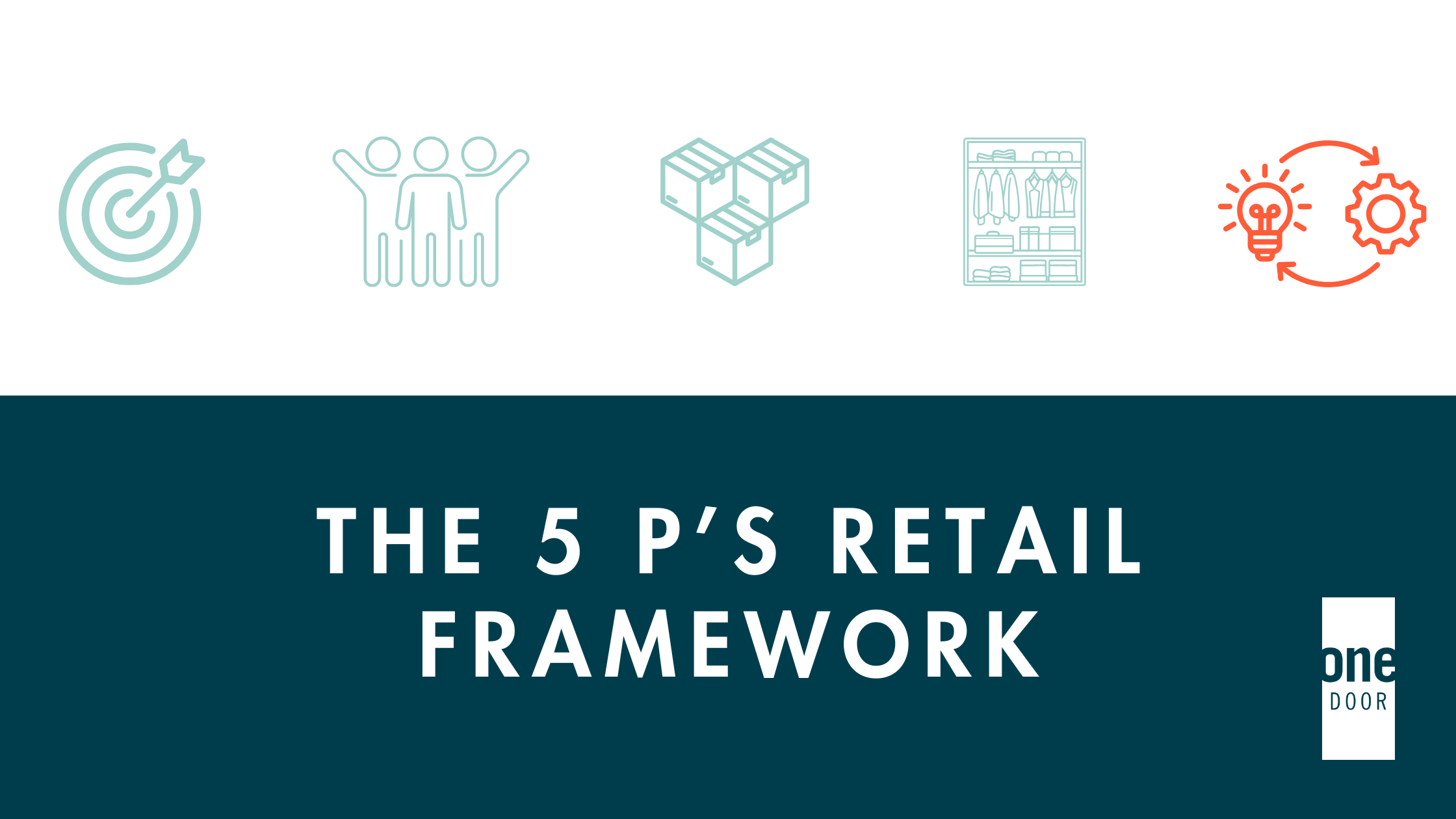
Passion, People, Product, Presentation, and Process: The Retail Framework Built for Scale
One of the most recognizable frameworks in retail is the 5 P’s.
Depending on your background, those P’s may stand for Product, Price, Place, Promotion, and People. Others — particularly in visual merchandising, store design, and retail operations — use variations such as Passion, People, Product, Presentation, and Process.
The specifics vary, but the underlying goal is the same: To understand the ingredients that drive retail success.
Regardless of which framework retailers follow, one element is consistently undervalued: Process.
Retailers invest heavily in building Purpose and Passion around their brand. They dedicate significant resources to developing People, curating Product assortments, and refining Presentation through store design and visual merchandising.
Yet, they often treat Process as administrative overhead, which is a mistake. Process is not paperwork or red tape. It’s the operational infrastructure that determines whether every other P can succeed at scale.
What Are the 5 P’s in Retail?
The 5 P’s in retail are a strategic framework for understanding what makes a retail experience work, not just in theory, but in the real world.
Passion
Passion is the emotional belief behind the brand. Also known as Purpose, Passion is what gives a retailer its perspective, energy, and goals. It shows up in the brand story, customer promise, and the enthusiasm associates bring to the store experience.
People
People include the store teams, field leaders, store planners, visual merchandisers, and operational teams responsible for bringing the brand to life. People are the human layer of retail execution.
Product
Product encapsulates the assortment, quality, value, relevance, and innovation that a retailer brings to market. Product is what gives shoppers a reason to engage.
Presentation
Presentation is the way products, fixtures, signage, adjacencies, and planograms come together to create a shoppable experience. It also reflects the physical environment, or “Place,” where customers interact with the brand. Presentation is where the visual merchandising strategy becomes visible to the customer.
Process
Process is about the systems, workflows, data, communication tools, and technology that make the first four P’s scalable, repeatable, and measurable.
Price and Promotion
Price and Promotion represent how retailers communicate value to customers. Price influences perception, positioning, and purchase decisions, while Promotion encompasses the campaigns, offers, and messaging used to drive awareness and demand.
Most retailers understand the customer-facing elements of retail intuitively. They know Passion creates differentiation. They know People drive service, Product fuels demand, Presentation influences conversion, and Price helps communicate value.
But Process is the element that determines whether those investments survive contact with the store floor. It’s the infrastructure that transforms retail strategy into consistent brand storytelling.
The Problem: Retailers Have Passion, But Can’t Scale It
Retailers aren’t short on vision. They invest heavily in brand purpose, compelling product assortments, creative visual merchandising, and customer experiences designed to differentiate them in the market.
Unfortunately, many retailers fall short on consistently executing the strategies behind that vision. This is where Process becomes essential.
When retail leaders ask, “What if?” Process answers, “Here’s how.”
- What if a rollout needs to scale across 100 stores?
- What if one location has different fixtures than the prototype?
- What if labor is limited during launch week?
- What if a localized assortment changes the display requirements?
- What if inventory, signage, or floor space don’t match the original plan?
This is where the vision often breaks down. Not because the idea was wrong in the planning meeting, but because it’s much harder to execute said strategy under real-world conditions.
Process operationalizes each strategy across hundreds of stores. It provides a practical framework for scaling ideas beyond the prototype store and into the realities of a diverse store fleet.
The Reality: Every Retail Strategy Depends on Process
Retailers often think of Process as a support function. In reality, it’s the operating system behind every other element of the business.
Passion, People, Product, Presentation, and even Price and Promotion all represent strategic decisions. Process determines whether those decisions can be executed consistently across the store fleet.
The question is, do retailers have the operational infrastructure required to scale the strategies behind the vision?
Without Process, Passion becomes aspiration. People become overwhelmed, Product becomes unavailable, and Presentation becomes inconsistent. Even Price and Promotion become disconnected from the customer experience.
Passion Is Only as Strong as the Process Behind It
Retailers spend years building brand purpose, defining customer promises, and creating differentiated experiences, but customers don’t experience Passion through mission statements. They experience it through how each location looks and feels.
For example, a retailer may promise local products, exceptional service, sustainability initiatives, and seamless omnichannel shopping.
Yet, when the store conditions vary dramatically and don’t live up to those promises, the customer experiences something very different from the brand’s intent. Process is what turns Purpose into reality.
Without it, Passion remains a corporate message rather than a customer experience.
People Are Only as Effective as the Process Supporting Them
Associates are expected to support customers, execute merchandising changes, fulfill online orders, manage inventory, maintain store compliance, and adapt to constant operational change — and it’s not for a lack of effort.
When instructions arrive through disconnected systems, priorities conflict, or execution requirements vary from store to store, even the best floor teams struggle to perform consistently. The results are frustration, rework, and burnout.
For retailers, poor execution creates a huge gap in brand experience. The solution is a strong Process that removes ambiguity and gives store teams clear direction, realistic priorities, and the information they need to execute confidently.
Product Is Only as Valuable as the Process That Delivers It
Product strategy is non-negotiable for retailers. They need to analyze demand, negotiate with suppliers, and optimize product assortments to serve specific customer needs.
Yet, Product strategy doesn’t create value until customers can actually find, access, and purchase those products. A lack of Process creates:
- Stockouts
- Misplaced inventory
- Delayed launches
- Incorrect assortments
- Inconsistent merchandising standards
A perfectly curated Product mix loses its impact when it reaches stores incorrectly — or doesn’t reach them at all. Process is what connects product planning to product availability. Without it, even the strongest Product strategy becomes vulnerable to operational breakdowns.
Presentation Is Only as Strong as the Process Behind It
Presentation is one of the most visible, costly investments retailers make.
From floor plans and fixtures to signage and displays, visual merchandising standards are consistently a top priority. This is because retailers lose $125B annually to poor visual merchandising.
(Download the full Cost of Poor Merchandising report.)
Yet Presentation is often treated as a creative discipline when it is equally an operational one.
A floor plan only works if it reflects a store’s actual fixtures and space constraints.
A promotional display only succeeds if it is installed correctly, stocked appropriately, and maintained throughout the campaign.
A localized merchandising strategy only delivers value if every store understands exactly how to execute it.
The best Presentation strategies are visually compelling and operationally executable, and that requires Process.
Price and Promotion Are Only as Effective as the Process That Executes Them
Pricing and promotional strategies are designed to drive demand, communicate value, and influence purchasing decisions, but they depend on flawless store execution.
A promotion loses effectiveness when signage arrives late.
A pricing strategy creates customer frustration when shelf labels don’t match checkout prices.
Seasonal merchandising underperforms when displays aren’t set correctly or when inventory isn’t available.
These may seem like small execution issues, but at scale, they become significant sources of lost revenue, reduced customer trust, and operational inefficiency.
Process ensures that Pricing and Promotions are delivered accurately, consistently, and on time across every store.
The 5 P’s Are Only Powerful When They Work Together
Retail success isn’t built on any single P.
Passion gives retailers direction, and People bring that direction to life. Product creates value, Presentation makes that value visible, and Price helps communicate to customers.
But none of them operate in isolation, and none of them succeed without Process.
Process is what connects strategy to execution, helping retailers to:
- Translate ideas into store-specific action
- Adapt to local market conditions
- Provide store teams with clear direction
- Create the accountability needed to measure and improve performance over time
That’s why the retailers that prioritize operational infrastructure in conjunction with strategy, those who think about “how” in addition to “why,” will succeed.
Process isn’t administrative overhead. It’s the anchor that holds the other P’s together, and in an industry under constant pressure to move faster, be more effective, and deliver consistent experiences, Process may be the most important competitive advantage a retailer can build.