Store Execution Is Where Retail Wins — or Falls Apart
Retail execution is where even the best plans can unravel. When execution is inconsistent, retailers don’t just lose brand consistency. They lose sales, waste labor hours, and slow down time-to-floor for every campaign.
And it’s not because the strategy was wrong. It’s because store teams are overloaded, under-trained, or left to interpret what “good” looks like under real-world conditions.
That’s why One Door’s Store Assistant offers a more unified retail execution experience, reimagined for the reality of modern store operations.
Powered by generative AI and One Door’s Digital Store Model, Store Assistant helps retailers close the execution gap where it matters most: Across thousands of stores, in real-world conditions.
The Real Problem: HQ Thinks in Campaigns, and Stores Think in Tasks
Retail execution breaks down when strategic initiatives hit the store level without being translated into clear, prioritized work.
HQ plans in campaigns and programs. Stores operate in time, tasks, and constraints.
Store Assistant bridges that gap by converting HQ intent into prioritized, store-specific execution with in-the-moment guidance that keeps work moving and reduces the need for manual follow-up.
The result is faster rollout, fewer missed steps, and less operational overhead for both stores and HQ.
Store Assistant: Simplifying Work for Store Teams
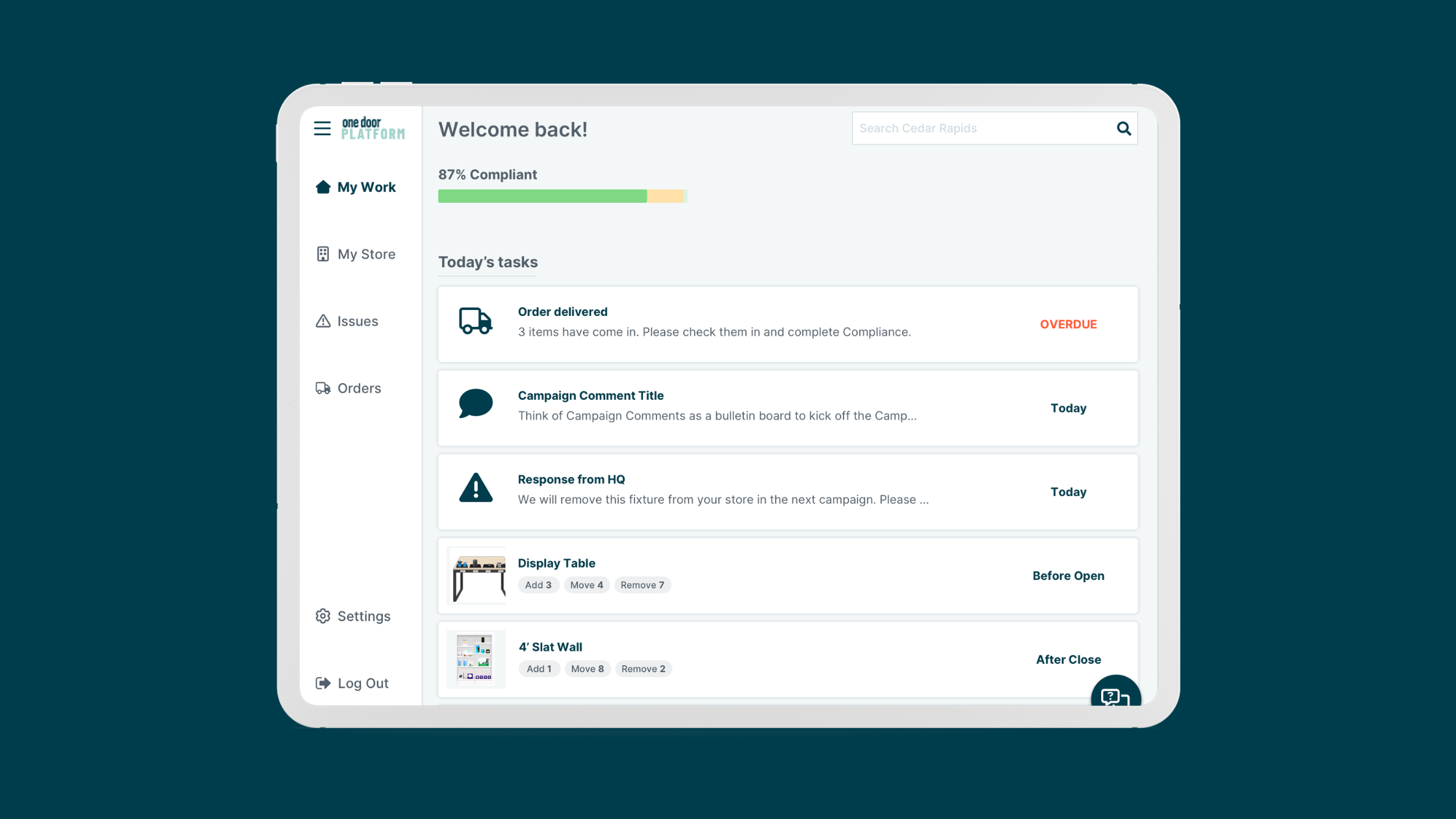
One Door’s platform spans retail execution end-to-end. Store Assistant is the store-facing execution layer — built to simplify work in stores while improving consistency across the fleet. It delivers:
- Prioritized work lists tailored to each location
- Rich, interactive visualizations that remove ambiguity
- Contextual, in-the-moment guidance
- Real-time issue resolution through natural language assistance
- Structured feedback from stores back to HQ
By translating HQ intent into clear, actionable execution at the store level, Store Assistant reduces friction, shortens rollout timelines, and enables scalable execution — without sacrificing merchandising precision.
Built on the Digital Store Model: Location-Specific Execution at Scale
Many platforms can distribute tasks or publish merchandising guides, but retail execution doesn’t break down because stores didn’t receive instructions.
It breaks down when those instructions aren’t adapted to the unique reality of each location.
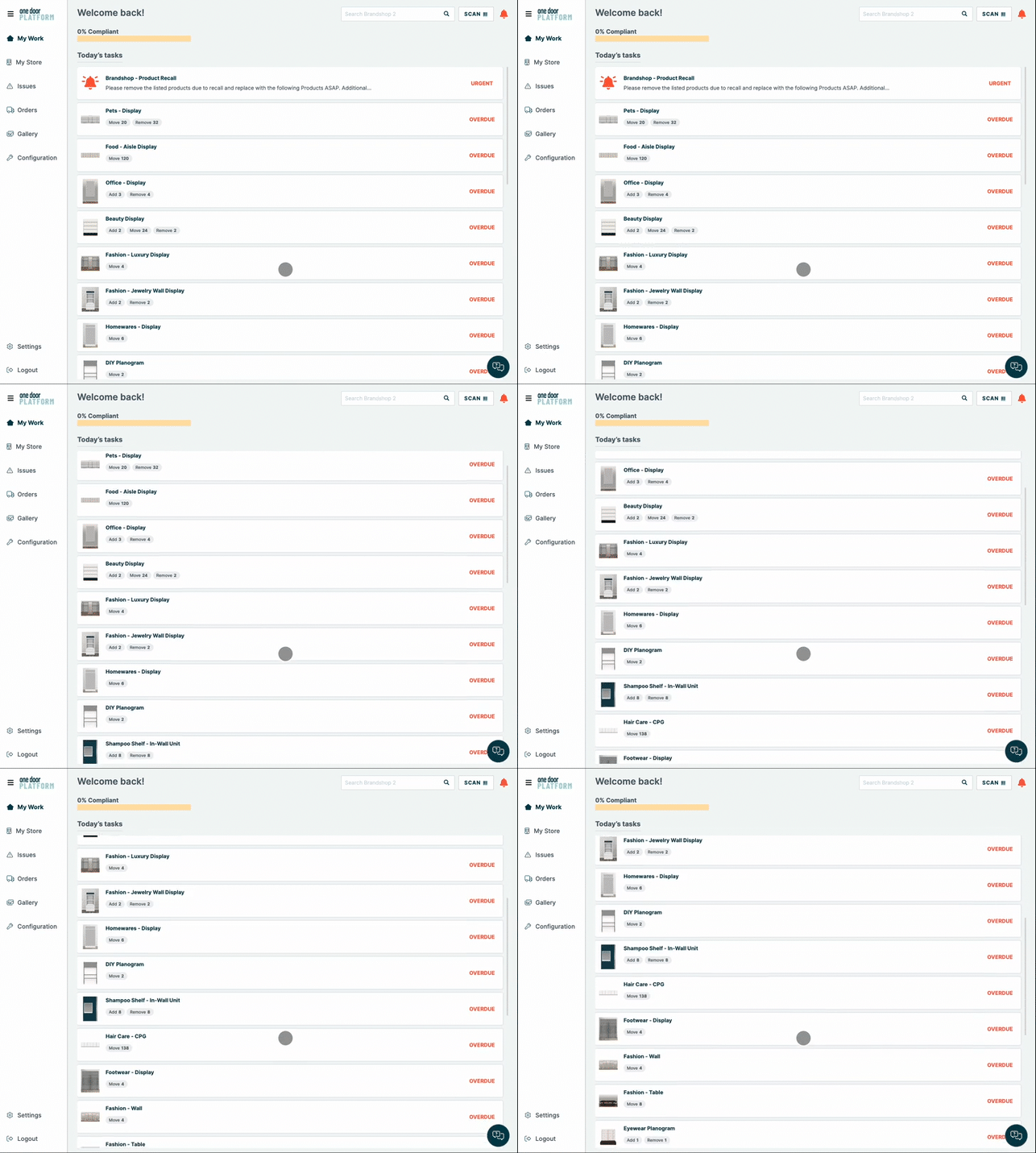
Store Assistant is powered by One Door’s Digital Store Model, a digital twin of every store in your fleet. That foundation changes everything.
Instead of pushing generic checklists, Store Assistant generates execution guidance based on each store’s:
- Floorplan
- Fixture sets
- Assortment differences
- Planogram variations
- Inventory availability
In short: We don’t just document your stores’ reality. We operate on it.
The result is execution that scales across thousands of locations — consistent in intent, precise in execution, and never generic.
How Store Assistant Changes Store Execution
Store Assistant reduces execution friction, accelerates time-to-floor, and improves operational efficiency by translating HQ intent into clear, prioritized store work — with the context and support teams need to get things done.
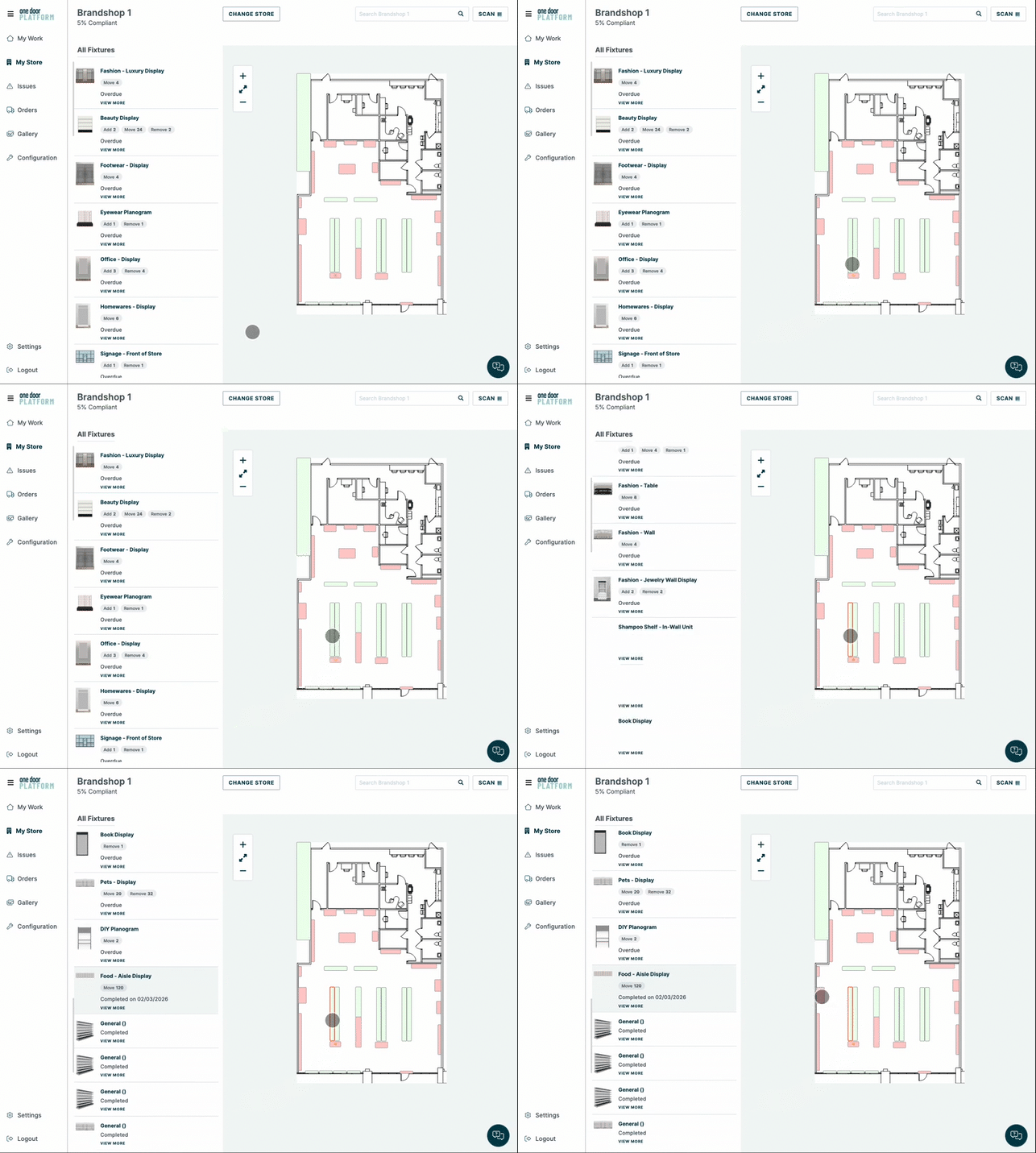
A Unified, Prioritized Execution Queue
Most platforms distribute work. Store Assistant orchestrates it.
By consolidating campaign directives, planograms, shipments, and issue workflows into a single prioritized queue, Store Assistant removes task ambiguity and reduces operational drag in stores.
Tasks auto-update as work progresses, keeping resets on track without micromanagement or manual follow-up from HQ. That means:
- Less wasted labor
- Fewer escalations
- More predictable rollout timelines
For one retailer, Store Assistant drove more than 11,000 monthly store-team sessions and a 6% increase in unique associate logins — a strong indicator that Store Assistant was successful in day-to-day store execution.
AI-Powered Assistance: Reducing Execution Downtime
Retail execution slows down when stores hit blockers that stall progress: Missing SKUs, damaged fixtures, unclear instructions, or incomplete orders.
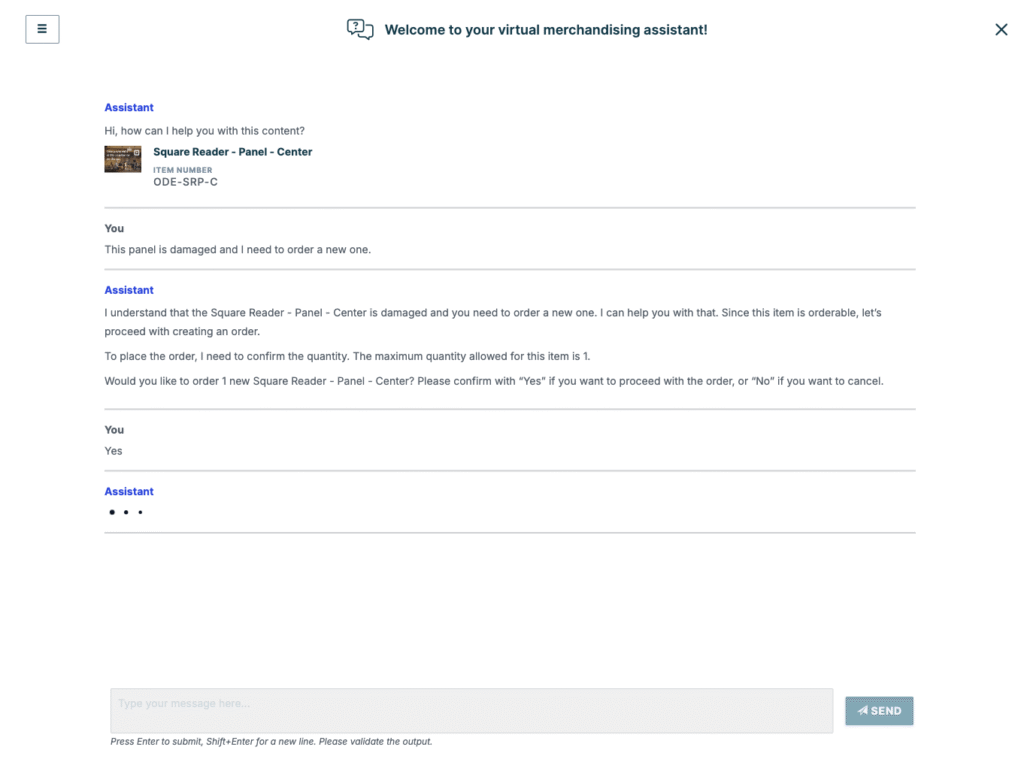
Store Assistant includes an AI-powered chat assistant that helps associates resolve issues in the moment, without waiting for manual communication from HQ.
Because it’s grounded in One Door’s store and planogram context, the assistant can reference relevant files and comments to guide next steps and accelerate resolution.
The result: Fewer stalled resets, faster time-to-floor, and less operational overhead for field and HQ teams.
Shipment Tracking and Check-In: Protecting Time-to-Floor
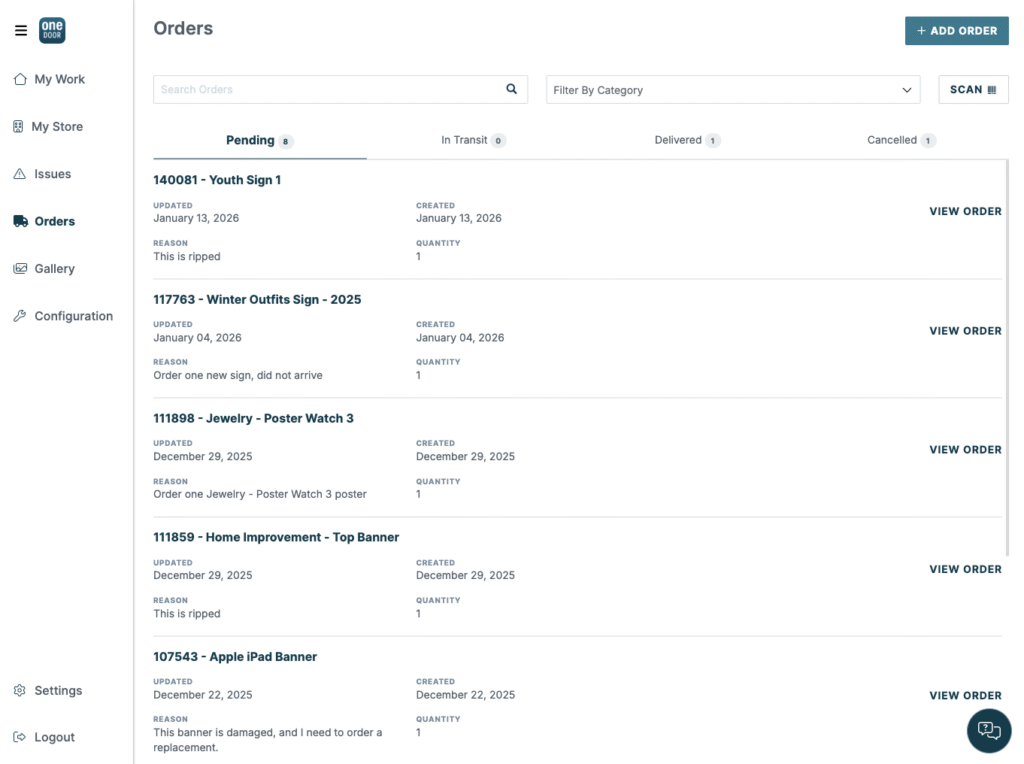
Retail launches can stall because stores aren’t ready. Store Assistant prompts associates to check in deliveries as soon as products arrive, creating clear accountability and ensuring resets don’t begin without the materials required to finish.
When something is missing, stores can immediately initiate an order — reducing delays, preventing wasted labor, and keeping campaigns on schedule across the fleet.
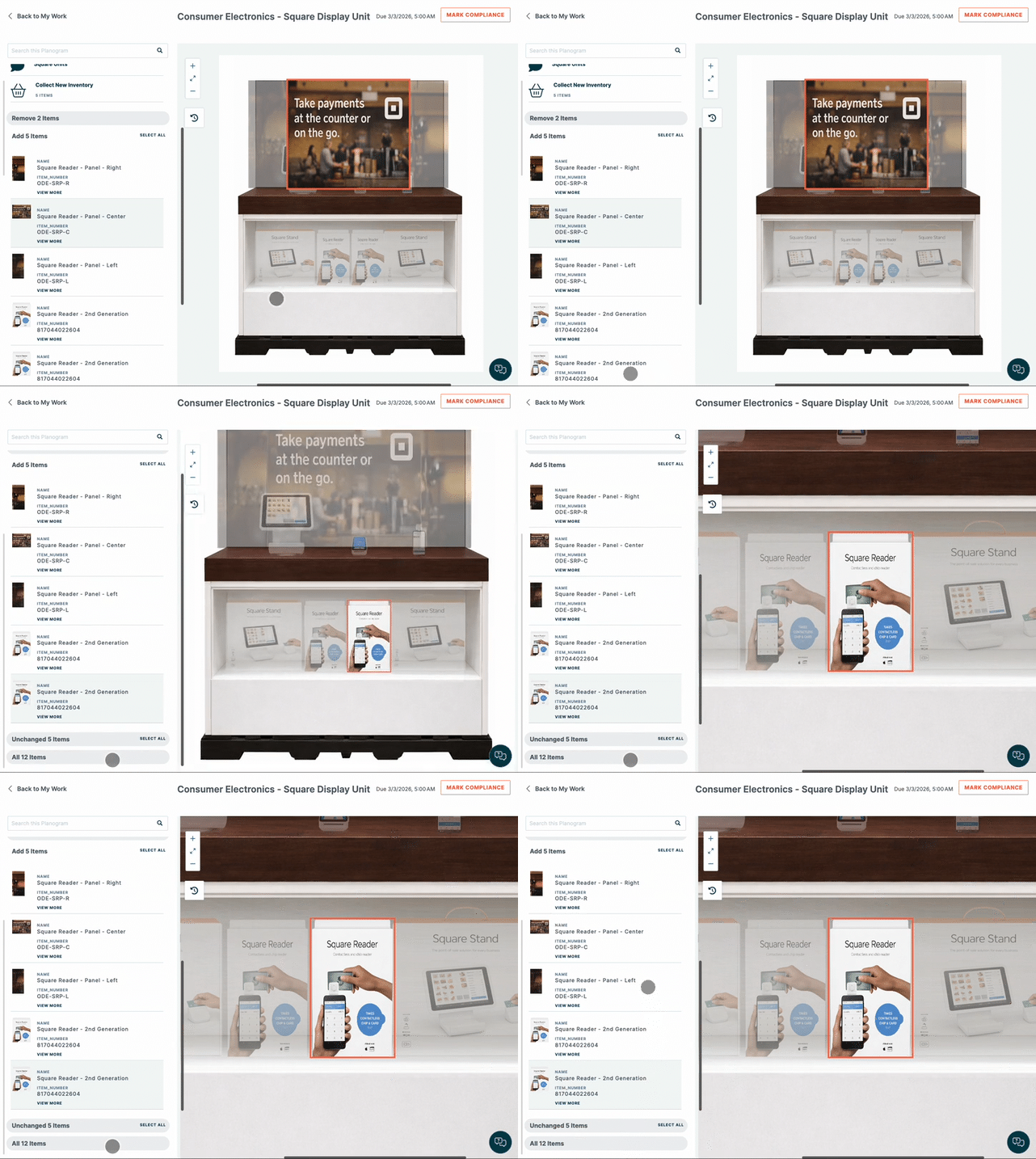
Planogram-Level Content: Reducing Reset Cycle Time at Scale
When instructions live at the planogram level, stores don’t have to search, interpret, or escalate questions. They simply execute.
By tying content directly to the fixture being set, Store Assistant reduces reset cycle time, improves first-pass accuracy, and helps campaigns reach the floor faster — without increasing coordination overhead at HQ.
Why It Matters: The Business Benefits of Store Assistant
Retail execution isn’t a support function. It’s a growth driver for business. When every store executes flawlessly using One Door’s Store Assistant, they see:
- Higher sales through faster, more accurate planogram resets
- Improved brand consistency that builds customer trust at every touchpoint
- Reduced labor costs by eliminating rework and manual coordination
- Real-time visibility for HQ into planogram compliance, team engagement, and store-level progress
Most importantly, Store associates who feel confident, capable, and empowered on the floor.
Ready to Learn More?
Retail operations leaders don’t need another task tool. They need an execution engine that connects planning decisions to store reality — consistently, at scale, without adding overhead.
Store Assistant is that layer. Explore it here, or request a personalized demo with our team.