How to Reduce Visual Merchandising Waste with Smarter Retail Design and Execution
For years, visual merchandising teams have absorbed a painful truth: Retail design and execution produce a lot of avoidable waste.
From extra signage and overstocked kits to duplicate shipments, some campaign materials never even see a sales floor.
For many brands, this waste has simply been “the cost of doing business,” but retailers who still rely on PDFs, mass printing, and blanket distribution are losing money, time, and credibility with their customers.
The good news is that visual merchandising waste isn’t inevitable. It’s the product of outdated processes — and it’s absolutely fixable.
The Hidden Waste You Can’t See Until You Look for It
Visual merchandising waste rarely shows up in a single line item. It hides in the gaps between systems, tools, and teams. Three of the biggest culprits are also the easiest to address:
Paper Signage that Gets Reprinted Again and Again
Every year, retailers produce millions of printed signs, inserts, and campaign materials. A surprising number never get used due to:
- Incorrect store allocations
- Last-minute assortment changes
- Store-by-store exceptions
- Damaged or missing shipments
In fact, stores spend an average of $2,500 per year on printed materials, much of which is discarded before it’s ever placed, and printed materials are only the start. Additional merchandising waste comes from:
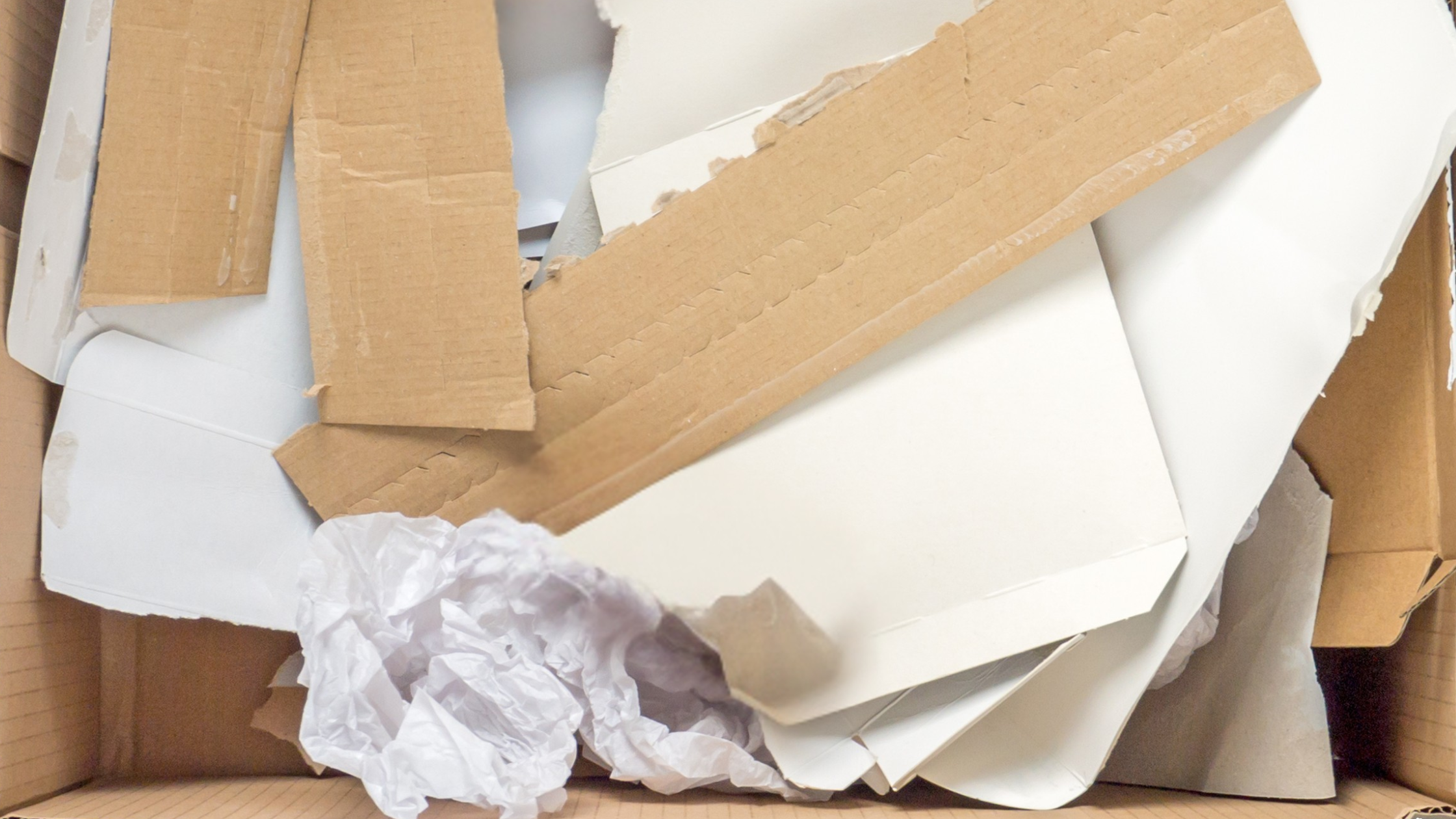
- Cardboard shipping boxes used only once
- Plastic wraps and protective packaging
- Single-use plastic cable ties used to secure signs
Paper isn’t the problem. Unnecessary printing (and unnecessary packaging) is.
Over-Shipments that Inflate Costs and Carbon Footprints
The outdated default — “When in doubt, send more.” — creates a cascade of operational waste:
- Surplus retail marketing kits
- Unused or obsolete signage
- Excess packaging materials
- Freight emissions
- Constant recycling attempts that turn into landfill waste
Store Confusion that Leads to Improvisation
Confusion doesn’t just create inconsistency. It creates material waste that could have been avoided entirely. When instructions are buried in equally as wasteful paper PDFs, store teams improvise. They:
- Order extras “just in case.”
- Print local replacements.
- Set displays incorrectly.
- Improperly discard mismatched or damaged components.
Why This Waste Persists: Single-Use Materials and Displays Designed for Disposal
Much of today’s visual merchandising waste traces back to one root cause: Displays and signage weren’t designed to live beyond a single campaign. Examples include:
- Merchandising elements made from non-recyclable materials
- Foam-core signage that can’t be reused
- Single-use fixtures that are designed to be discarded
- Temporary displays that break easily and end up in the dumpster
This is where sustainable display design makes a measurable impact: Reclaimed wood, recycled cardboard, natural fabrics, and modular units extend the life of displays and cut waste dramatically — without sacrificing visual appeal.
The Old Model Is Broken. Here’s What Replacing It Looks Like.
For decades, visual merchandising teams followed a predictable formula: Overproduce, overship, and hope stores figure it out.
Today’s fast-moving retail environment makes that model unsustainable: Financially, environmentally, and operationally.
Forward-thinking retailers are ditching paper-heavy, guesswork-driven processes and adopting systems built around visibility, precision, and local relevance. They’re integrating sustainability directly into merchandising operations by:
- Using recycled and responsibly sourced materials
- Reducing shipping emissions with lighter, modular builds
- Extending display life with reusable components
- Replacing single-use cable ties with reusable alternatives
- Including fix-it kits for replaceable parts
- Introducing energy-efficient digital screens for dynamic messaging
- Moving manufacturing closer to stores to reduce carbon output
Sustainability, as Deloitte notes, is no longer a differentiator; it’s a baseline expectation from consumers. However, the biggest leap forward comes from modernizing the systems that are responsible for this waste.
How One Door Helps Retailers Reduce Waste at the Source
One Door helps retailers eliminate visual merchandising waste by transforming how plans are created, localized, shipped, and executed.
Data-Backed Print Reduction
By combining data from One Door’s Digital Store Model and Insights, teams can print with intention and eliminate waste with accurate POP counts:
- Identify exactly which stores need which materials to reduce overshipping
- Communicate what truly must be reprinted with real-time feedback
- Retire underperforming or rarely used displays based on data
- Reuse or repurpose signage and fixtures strategically
Smart Store Allocation
Using smart business rules and localization tools, retailers can make sustainability operational, not theoretical:
- Automate tailored marketing kits by store type or region
- Avoid shipping materials that won’t be used
- Maintain transparency on what stores receive
- Reduce packaging, freight, and overstock waste
Real-Time Clarity
Sustainability is also about reducing friction. When stores execute the first time, waste disappears at the source. Store teams stop improvising and start executing when they get:
- Clear, visual instructions with Store Assistant
- Accurate store-specific plans
- Real-time updates
- An easy way to request missing materials via Store OMS
Sustainable Display Lifecycles
While sourcing decisions begin in design, One Door ensures these sustainable display elements are planned, allocated, and executed correctly across every store. This maximizes lifespan, prevents damage, and reduces material turnover:
- Promoting reusable, modular display units
- Supporting recycled and natural materials
- Reducing damaged/obsolete display disposal
- Limiting campaign waste through virtual previews in Studio
- Integrating eco-friendlier digital displays for dynamic content shifts
Paired with operational systems, these design choices create a closed loop of efficiency, reuse, and reduced material churn.
Ready to Reduce Waste and Improve Planning Across Every Store?
Visual merchandising waste isn’t a creative problem. It’s a systems problem, and systems can be transformed. The old way of planning and distributing merchandising workflows is limiting what modern teams can achieve.
Download our guide, How to Improve Multi-Store Planning and Planogram Distribution, to see how leading retailers are:
- Previewing campaigns in virtual stores before printing or shipping anything
- Replacing static PDFs with dynamic, real-time instructions
- Eliminating reprints, returns, and last-minute resets
- Localizing campaigns automatically using Smart Containers
- Building sustainable, repeatable, and zero-waste workflows
This is more than a planning guide. It’s a blueprint for eliminating visual merchandising waste at the source, because when every store gets exactly what it needs — no more, no less — sustainability accelerates and everyone saves.