Virtual Reality in Retail Store Planning: From Experimental to Essential
The “strategy” of using static planograms, physical mockups, and costly pilot stores is over. Virtual reality (VR) is now an essential store planning tool that top retailers and brands depend on to make smarter, faster, and lower-risk decisions.
With immersive 3D environments, retail teams can now design, visualize, and validate store concepts before they ever reach the floor. Here’s how VR can be used as a critical component of modern store and assortment planning.
Plan Store Layouts More Accurately and With Less Risk
Traditional retail space planning often relies on static floor plans and physical mockups. These tools are expensive, slow, and disconnected from real shopper behavior.
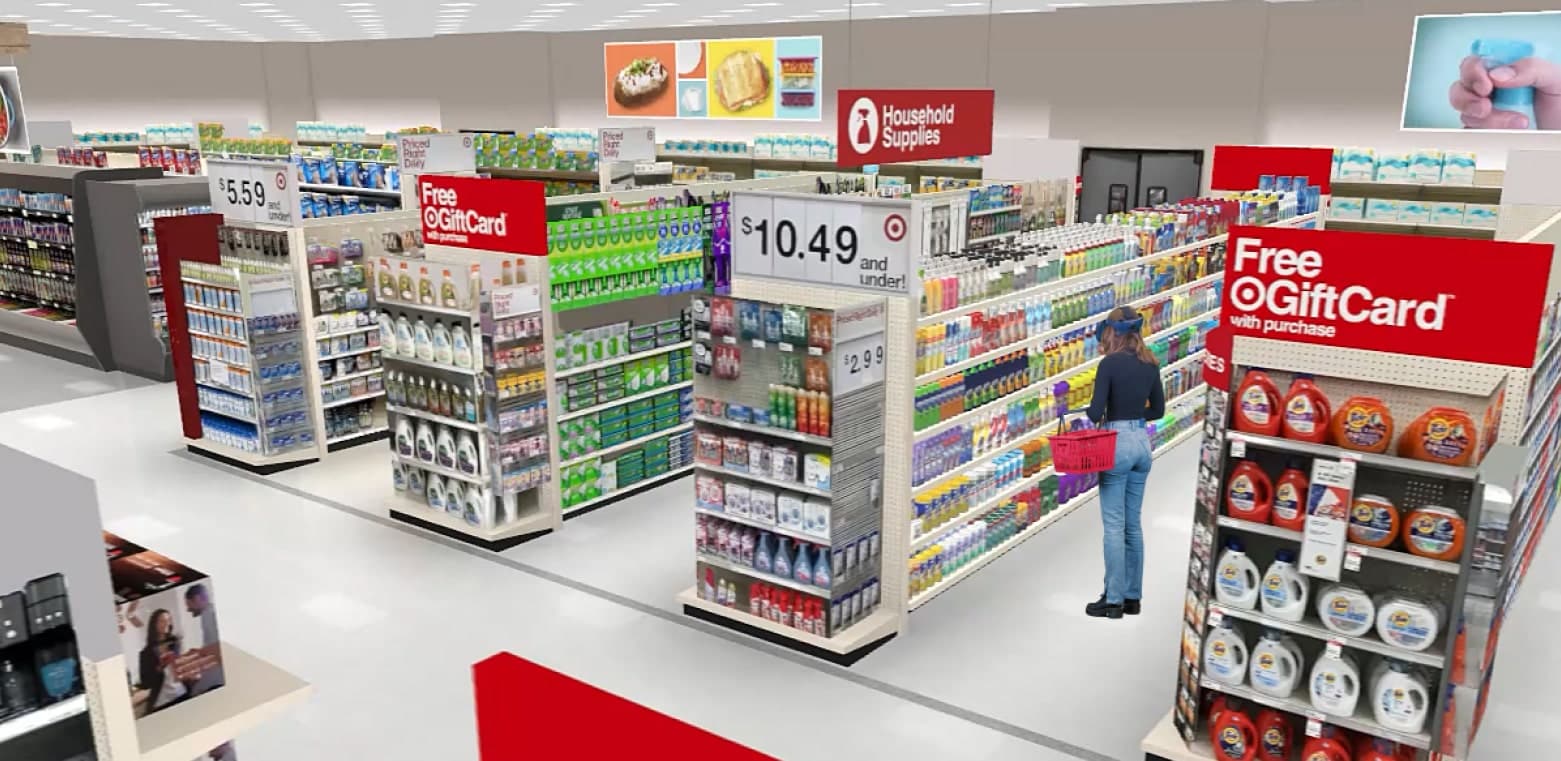
3D VR planning changes that by letting retailers design and test layouts in true-to-scale, photorealistic environments that mirror the physical world. Using adjustable digital fixtures, planners can:
- Quickly build and modify retail floor plans or displays using 3D store layouts
- Experiment with visual communication and wayfinding
- Evaluate how design decisions influence traffic flow and customer experience
- Identify potential bottlenecks
- Optimize fixture placement
- Refine visual merchandising strategies before construction begins
A variety of virtual store environments, from grocery and big box to drug and convenience, gives retailers a flexible starting point for space management. Whether remodeling or launching a new store, teams can create 1:1 digital replicas to visualize and test design concepts in minutes rather than months.
By previewing store concepts at life-size scale, retailers gain confidence to invest wisely, avoid costly rework, and maximize space performance. VR turns store planning into a strategic advantage rather than a guessing game.
Optimize Category and Assortment Planning
Category management has always been about precision: The right products, in the right stores, at the right time. Yet, static planograms and spreadsheet-based analysis often limit how effectively teams can test and visualize their strategies.
3D VR planning provides a faster, more accurate way to design and optimize assortments. In immersive virtual environments, planners can arrange aisles, fixtures, and products in true-to-scale space, instantly seeing how changes in placement, flow, or facings impact visibility and performance.
With VR-based category management tools, retailers can:
- Build and refine layouts that align with shopper missions and brand storytelling
- Identify assortment gaps or overlaps across regions and formats
- Visualize how 3D planograms translate to the real shelf before rollout

Design Front-of-Store Experiences That Drive Traffic and Sales
Front-of-store space shapes first impressions, drives impulse purchases, and serves as a key brand touchpoint. It’s also one of the most complex areas to plan.
With 3D VR, retailers can now design, test, and refine checkout and queuing areas in digital environments that replicate real-world conditions. Using a front-end builder, planners can start in 2D — configuring lanes, fixtures, and layouts — then bring those designs to life in immersive 3D.
By exploring layouts at true scale, teams can simulate shopper movements within the queue, visualize different sightlines, and test product visibility to ensure each front-end space maximizes efficiency and engagement.
This virtual-first approach enables retailers to:
- Experiment with modular queueing strategies to improve flow
- Test impulse zones, signage, and product placement
- Rapidly prototype layouts before committing to physical builds
Accelerate Cross-Functional Decision-Making
Store planning is inherently collaborative, requiring alignment across visual merchandising, store operations, and retail marketing. With VR visualization, those teams can now work together in shared, digital environments instead of relying on static files and fragmented feedback.
When everyone reviews the same 3D model, approvals accelerate, communication improves, and decisions are made with confidence. These immersive plans transition directly into executable store plans, creating measurable accountability across the organization.
Connect Virtual Planning to Real-World Execution
Many VR tools stop at visualization. One Door’s visual merchandising platform goes further, connecting immersive 3D planning to real-time, store-specific execution. By uniting visualization, data, and in-store compliance tracking, One Door gives retailers complete visibility from concept to compliance.
Visual merchandising teams can localize layouts, monitor compliance, and ensure every plan is executed exactly as intended across every store, every time. This end-to-end closes the loop between virtual design and real-world results.
Conclusion: VR Is the New Foundation of Retail Planning
Virtual reality is no longer a novelty. It’s the new foundation of agile, data-driven retail planning.
Retailers using VR today are already seeing faster approvals, higher compliance, and measurable sales lift from smarter, shopper-centric layouts.
As planning, execution, and analytics continue to converge, immersive design tools will define the next generation of retail excellence.
Unlock the Power of VR and AI in Visual Merchandising
VR is just the beginning. Download our Retail, Visual Merchandising, and AI Trends Guide to see how leading retailers use VR, augmented reality, and artificial intelligence to predict performance, personalize assortments, and optimize every store layout.