The Bigger Picture: Visual Merchandising as a Living Digital Medium
Despite hot takes across the retail industry, the digital transformation of visual merchandising isn’t about replacing artistry with algorithms. It’s the opposite — an expansion of creative control.
Stores are becoming responsive ecosystems where design decisions and data signals coexist. As shoppers navigate omnichannel retail, visual merchandising has become the connective tissue between inspiration and purchase. Every color, display, and digital cue now works in tandem to shape a single, unified brand narrative.
Because of this, visual merchandising has become a living, digital discipline. Today’s merchandisers work at the intersection of data, creativity, and technology, translating business strategy into memorable in-store moments. The art of storytelling through space remains, but the methods have changed.
Here’s how leading retailers are rewriting the rules of digital visual merchandising — embracing technology, insight, and agility to create connected experiences that drive both engagement and performance.
Static Store Layouts Give Way to Dynamic Flow
The traditional store layout, once locked in for months, is being reimagined as a fluid experience. Using traffic sensors, heat maps, and real-time Store Insights, retailers are designing adaptive floor-flows that mirror digital UX design.
Assortments shift with behavior, focal zones evolve with dwell time, and visual pathways flex with shopper intent. The result is a store that behaves more like a digital platform: Alive, responsive, and continuously optimized.
The Rise of Predictive Visual Merchandising
Where product placement once relied on instinct, data now provides the creative foundation. Retailers are using predictive analytics and shopper insights to balance SKU density with discovery, localize assortments, and fine-tune fixture layouts by behavior.
The shift is subtle but seismic: Instead of replacing creativity, data amplifies it. Merchandisers can now design with confidence, knowing every decision reflects behavioral evidence rather than guesswork.
Intelligent Store Systems Replace Stagnant Standards
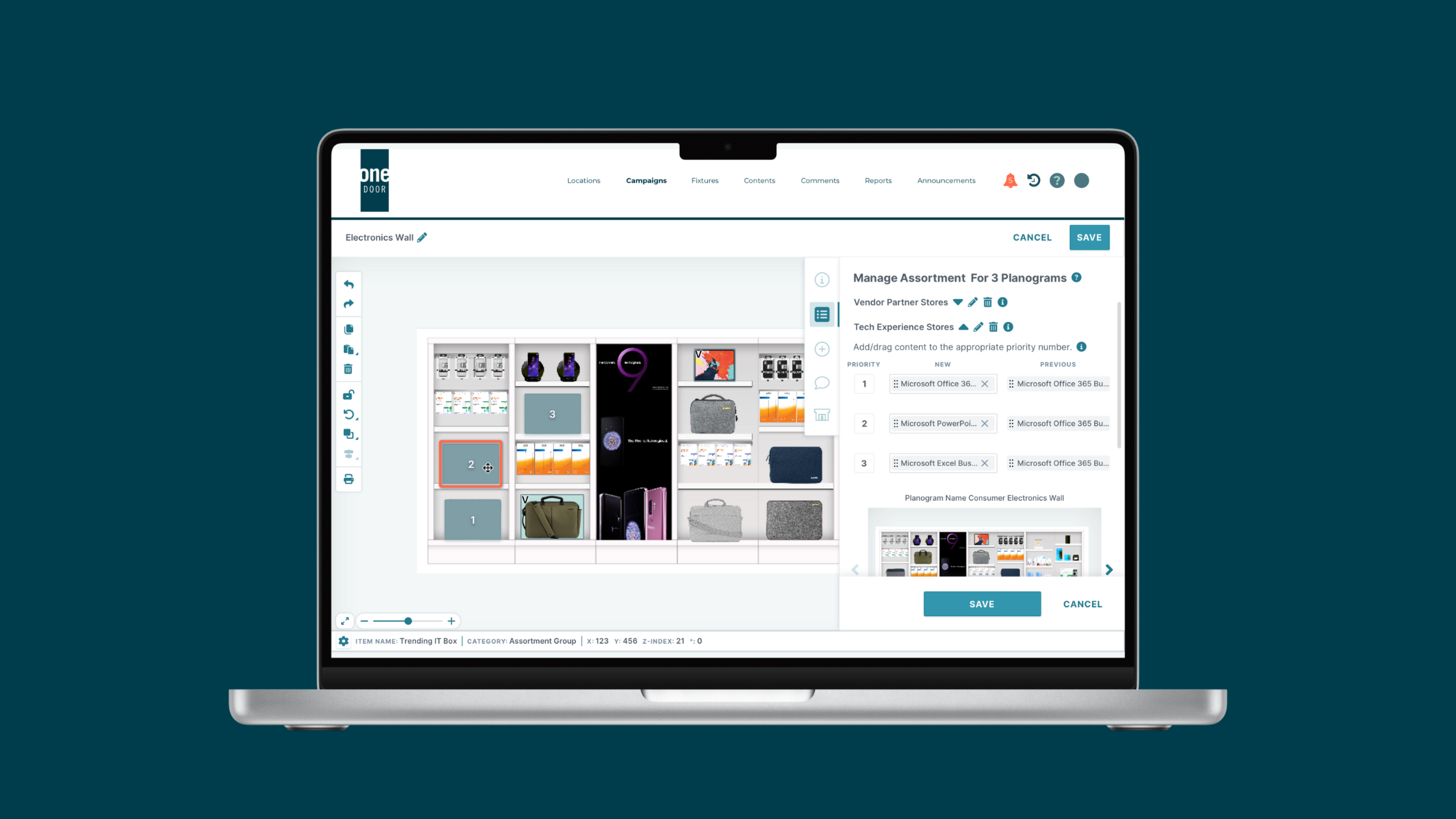
Behind every evolving display is a network of connected store intelligence. Visual merchandising today is powered by unified data, dynamic Digital Store Models, and precise store communication.
Visual merchandisers monitor, adjust, and optimize like digital campaign managers. Digital twins of store environments allow them to visualize new layouts, test changes virtually, and share directives instantly across locations.
The result? Creativity scales, and in-store execution stays consistent, bridging a long-standing gap between HQ intent and store reality.
Seasonality Turns into Real-Time Relevance
Retail’s rhythm used to be defined by seasonal resets. Now, it’s dictated by moments. In an era of cultural fluidity, retailers are trading rigid retail marketing calendars for modular systems that enable rapid, agile refresh.
Smaller, more frequent updates keep stores fresh, relevant, and sustainable. This is the new seasonality: Responsive, topical, and data-informed.
Light, Color, and the New Language of Atmosphere
Light and color have always shaped emotion in retail, but in the digital era, they’ve become programmable tools for intent. No longer static choices on a floor plan, light and color shift dynamically with the time of day, weather, and shopper energy.
Smart systems orchestrate color palettes and brightness in harmony, going beyond visual merchandising best practices.
This integration of data and design gives retailers a new language of atmosphere — one that guides behavior, sustains brand coherence, and communicates mood with precision. Illumination and color function as responsive storytelling tools, shaping not only what shoppers see but how they feel.
Signage Spearheads Shoppable Media
Retailers are not categorizing signage as “décor” anymore. They’re integrating it as part of a living retail media network. Digital displays, QR codes, and NFC tags connect physical storytelling with digital engagement.
A campaign can be tracked like an ad impression. A simple “Tap to Learn More” transforms signage into measurable engagement. The best signage blends movement, context, and measurable performance and becomes a two-way interface between the store and the shopper.
Immersive and Phygital Storytelling: Where Touch Meets Emotion
The next generation of in-store storytelling blurs the line between theater and technology. Point-of-purchase displays are evolving into interactive stages where motion sensors, responsive screens, and “Lift and Learn” experiences transform instinctive shopper behavior into meaningful engagement.
When a customer picks up a product, digital media displays respond instantly, offering complementary content, context, or recommendations. Each interaction becomes both sensory and measurable, capturing dwell time, product interest, and conversion probability.
For a deeper look at in-store technologies, like “Lift and Learn” and AI-driven visual engagement, explore our Guide to Retail, Visual Merchandising, and AI Trends.
Simultaneously, focal zones are becoming immersive brand worlds. Retailers are layering sound, light, scent, and augmented reality to build emotional depth and narrative continuity. Phygital storytelling turns the store into an evolving experience that entertains, informs, and learns in real-time.
It’s less about fixtures and displays, more about feeling and dialogue. That same storytelling impulse extends outward — to the storefront itself…
Storefronts Transform into Content Studios
Windows have evolved from static theater to dynamic brand channels built for the lens.
In an algorithmic world, the store window is no longer just what shoppers see. It’s what the internet sees first.
Retailers now design window displays that photograph as beautifully as they perform in real life, using kinetic typography, looping motion, and depth to encourage user-generated content. Each display becomes its own campaign moment, measurable by views, shares, and visits.
Visual Merchandising’s Digital Evolution
Across all of these shifts, one theme emerges: Visual merchandising has become a continuous discipline rather than a periodic task. It lives in real-time and is shaped by evolving data, creativity, and collaboration between HQ and store teams.
Digital visual merchandising rewards agility over perfection. Merchandising strategies that were once static are becoming iterative, measurable, and alive.
For brands and retailers ready to embrace this evolution, the payoff goes beyond better displays. It’s a smarter, more connected, continuously relevant in-store experience that keeps shoppers coming back.